Forum 34.4: Regulating Online Harms in Canada

In this special issue, guest edited by Dax D'Orazio (Guelph) and Michael Asres (York), scholars of law and politics at different career stages examine some of the key legal, political, and practical challenges raised by Canada's Online Harms Bill (Bill C-63), which died on the order paper when Parliament was prorogued in early 2025. In anticipation of subsequent attempts to regulate online harms, the issue's contributors reflect on how the law ought to respond to the rapid spread of hateful or otherwise harmful content online, and on how this response can be tailored to still leave ample room for the exercise of expressive freedom. You can access the full issue for free by clicking the individual article links below.


FULL ISSUE: REGULATING ONLINE HARMS IN CANADA


Editorial Introduction: Regulating Online Harms in Canada
Michael Asres, Dax D'Orazio
i-viii

Online Harms Legislation and Lawful but Awful Expression
Emily Laidlaw
1-20

Protecting Us and They/Them: The Online Harms Act as a Missed Opportunity for Queer Expressive Freedom under the Charter
Joe Byram
21-42

Beyond Public Law: Recognizing a Tort Remedy for Hate Speech in Canada
Kenneth Grad
43-64

A New Life for Section 13 of the CHRA?
Richard Moon
65-72

Hate Speech in the Headlines: National Newspaper Coverage of Free Expression Controversies and the Human Rights Backlash
Michael Asres, Dax D'Orazio
73-94

Online Harms and Hate Speech: The United Kingdom’s Online Safety Act as a Model for Canada
Emmett Macfarlane
95-104

Forum 34.3: Fair Voting BC

We're delighted to announce the publication of a new special issue of the Constitutional Forum. This special issue comprises a series of short commentaries on the Ontario Court of Appeal's recent judgment in Fair Voting BC v Canada (Attorney General), in which the Court rejected claims that Canada's "first-past-the-post" electoral system unjustifiably violates sections 3 and 15(1) of the Charter of Rights and Freedoms (the right to vote and the right to equality). You can access the full issue for free via the links below.


CONSTITUTIONAL FORUM: 34.3 (Special Issue: Fair Voting BC)

***

Table of Contents

***

Fair Voting BC: The Charter, Courts, and Election Law
Léonid Sirota

Nothing to See Here: Sex Discrimination and the Challenge to “First Past the Post” in Fair Voting BC
Kerri Froc

The Application of the Charter to Legislation Unilaterally Amending the Constitution of Canada under Section 44 of the Constitution Act, 1982
Michael Pal & Sujit Choudhry

Forum 34.2: Open Issue

We're delighted to announce the publication of a new open issue of the Constitutional Forum, guest edited by Areeba Ismail, Maria Kalapurayil, and Nicole Ibalio (2025 CCS Summer Students and JD Candidates at the University of Alberta). You can access the full issue for free via the links below:


CONSTITUTIONAL FORUM: 34.2 (Open Issue)

***

Contents

***

Editorial Introduction
Areeba Ismail, Maria Kalapurayil, Nicole Ibalio

Emergence of Contemporary Indigenous Restorative Justice in Canada
The Honourable Leonard S Tony Mandamin

What is Sovereignty?
Ian Peach

The Constitutional Status of Overbreadth: A Reply to Professor Stewart
Colton Fehr

Is the Notwithstanding Clause an Ouster Clause?
Adebayo Majekolagbe

The Charter’s Forgotten Weapon: Reclaiming Section 28 For Trans Equality
Erin Masters

Surveillance Capitalism and the Charter: Infusing the Common Law with Charter Values
Miles Schaffrick

Notwithstanding the Backbench: Section 33 in Non-Government Bills
Charlie Feldman

Review 29.2 & 29.3: Our More Than Human Constitutions

The Centre is delighted to host a special double issue of the Review of Constitutional Studies, which can now be downloaded for free via the links below. The special issue is entitled "Our More Than Human Constitutions," and was guest edited by Professors Lindsay Borrows (Queen's University) and Jessica Eisen (University of Alberta). It comprises contributions from scholars in an array of academic fields -- including constitutional law, Indigenous law, environmental law, animal law, and ethnobotany -- on the ways in which our legal orders, Indigenous and state, approach the regulation of the more-than-human.

***

Issue 1: 29.2

Introduction: Our More-than-Human Constitutions
Borrows, Lindsay; Eisen, Jessica

Learning Anishinaabe Law from the Earth
Borrows, John

Transforming Constitutionalism from a More-than-Human Perspective
Nedelsky, Jennifer

Nehiyaw Pimatisiwin and Regenerative Constitutionalism
Lindberg, Darcy

Dark Innovations, Climate Justice, and the Canadian Charter
Majekolagbe, Adebayo

"A Hot Day in Iqaluit"? Environmental Rights in Canada's Constitutional Cul-de-Sac
Wood, Stepan

***

Issue 2: 29.3

Making Space for Indigenous Legal Relationship with Plants in Aboriginal Law
Spalding, Pamela

Learning Law from Plants
Borrows, Lindsay

Re-Learning Reciprocity: Settler Treaty Obligations and the More-than-Human World
Askew, Hannah

Learning about Treaties with the Animal People: Lessons for Treaty 8
Gimenez, Rebeca Macias

Animals, Colonialism, and the Rule of Law
Deckha, Maneesha

The Unwritten Constitution and the More-than-Human World
Eisen, Jessica


In addition to the CCS, the following organizations supported this project:

Forum 34.1: Responsive Judicial Review

The Centre is excited to announce the publication of a new special issue of the Constitutional Forum! This special issue (34.1) flows from a workshop co-organized by the uOttawa Public Law Centre and the Centre for Constitutional Studies (uAlberta), held at uOttawa in March 2024. The workshop brought together a small group of constitutional experts to talk about Rosalind Dixon's landmark monograph, Responsive Judicial Review. This special issue comprises written versions of papers first presented at that workshop, along with a response to these papers from Professor Dixon. It encompasses reflections on a number of specific and currently contentious constitutional questions, including how courts should respond to the uptick in provincial recourse to the notwithstanding clause, the proper role of unwritten constitutional principles in judicial decision-making, and the limits that principles like democracy and federalism place on the practice of judicial review.


Special Issue 34.1: Responsive Judicial Review


Contents


Editors’ Introduction: Responsive Judicial Review
Richard Mailey, Vanessa MacDonnell

Living Dead Constitutionalism or Why Old Constitutional Worlds Are Never Lost for Good: A Comment on Rosalind Dixon’s Responsive Judicial Review
Jean-Christophe Bedard Rubin

Out of the Shadows: Responsive Judicial Review and the Resurgence of the Notwithstanding Clause
Marion Sandilands

The Regime Politics of Responsive Judicial Review
Geoffrey Sigalet

The Role of Democratic Majority Understandings of Rights in Rosalind Dixon’s Responsive Judicial Review
Vanessa MacDonnell

Deconstructing City of Toronto: Unwritten Constitutional Principles and Responsive Judicial Review
Richard Mailey

Responsive Judicial Review in Canada: Reflections on the Notwithstanding Clause and Beyond
Rosalind Dixon


Forum 33.4: Horizontal Effect and the Charter

We're delighted to announce the publication of a new special issue of the Constitutional Forum (Issue 33.4). This issue is predominantly comprised of papers by participants in a CCS workshop on the horizontal effect of Charter rights, held at UBC 's Allard School of Law in January 2024, and co-organized by professors at Allard. The workshop addressed some of the key issues surrounding the case of Cool World v Twitter, which involves a PR firm contesting Twitter's refusal to run paid ads for a documentary (The New Corporation) by arguing that Twitter's common law rights should be interpreted in a way that's consistent with the Charter value of free expression. Some of the papers address Cool World directly, while others address the surrounding legal framework derived from RWDSU v Dolphin Delivery and Hill v Church of Scientology. All engage with questions about the manner in which the Charter applies and should apply to private legal relations.


Editors' Introduction: Beyond Dolphin Delivery
Margot Young, Richard Mailey, Anthony Sangiuliano
i-ix

The Hidden Promise of Dolphin Delivery: Shields, Swords and Horizontal Application of the Canadian Charter of Rights and Freedoms
Joel Bakan, Sujit Choudhry
1-16

Towards a Less Woolly Conception of Horizontal Effect
Johan van der Walt
17-30

A Kick in the Caboose: Recovering the Judicial Horizontality of Constitutional Equality Rights
Anthony Sangiuliano
31-48

Charter Horizontality, the Public/Private Divide, and Responding to Injustice
Sina Akbari
49-66

“We do not really know why this approach was taken”: Explaining and Modifying the Supreme Court’s Approach to the Indirect Horizontal Effect of Charter Rights
Richard Mailey
67-80

Constitutional Forum: Issue 33.3

We're delighted to announce the publication of a new issue of our journal, Constitutional Forum. Issue 33.3 is an open issue featuring contributions from Joel Bakan, Angela Fernandez, Robert Diab, and Paul Chartrand. Articles can be accessed by clicking the links below.

Issue 33.3:

Table of Contents (PDF)

Articles:

Negating Positive Rights: A Note on Mathur v Ontario
Joel Bakan

Ontario’s Ag-Gag Law, Where do Things Stand?
Angela Fernandez

What is Most Bothersome About Section 33: Or What Hasn’t Yet Been Said
Robert Diab

Bill C53: An Ill-Advised Adventure of State Interference in the Constitutional Evolution of the State-Aboriginal Relationship
Paul Chartrand

Review of Constitutional Studies: Issue 28.2

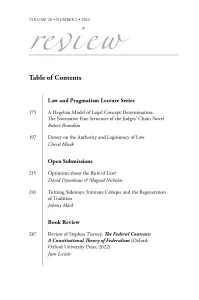
The Centre is excited to announce the publication of our latest issue of the Review of Constitutional Studies, which is now available via EBSCO and will be available in due course on Heinonline. This latest issue, issue 28.2, is an open issue that also features two reprinted articles by Professors Robert Brandom and Cheryl Misak. These articles are reprinted to commemorate the Centre's "Law and Pragmatism" lecture series, which ran from late 2023 to early 2024 and was organized by the Review's Co-Editor-in-Chief, Professor Josh Nichols (McGill). We're grateful to Professors Brandom, Misak, and Nichols for facilitating the republication of these exceptional papers, and for giving us the opportunity to bring them to a new audience. We're also grateful to the other contributors to this issue: David Dyzenhaus, Maguid Nicholas, Johnny Mack, and Jean Leclair.


Constitutional Forum: Issue 33.2

We're excited to announce the publication of our latest open issue of the Constitutional Forum, guest edited by CCS Summer Students Krystin Hoffart, Laura McKenzie, and Saloni Sharma. To view individual articles in the new issue, please click the links below.


Table of Contents (PDF)


Articles


Natasha Bakht & Lynda Collins, Notwithstanding the Notwithstanding Clause: A Case for Constitutional Guardrails on Section 33 of the Charter of Rights and Freedoms

Emmett Macfarlane, Not Merely Interpretative: The Supreme Court’s Application of Section 25 of the Charter of Rights and Freedoms and its Implications for Section 28

Sandrine Ampleman-Tremblay, R v Lufiau, R v Varennes, and The Gamble of Litigating a “Right” to Jury Trials Outside of Section 11(f)

Peter Wills & Mary Angela Rowe, The Prudent Parliament and Section 24(1)


Constitutional Forum 33.1 (2024): Criminal Sentencing and the Charter

Constitutional Forum 33.1 (2024)

Special Issue: Criminal Sentencing and the Charter (Guest Edited by Professor Colton Fehr, University of Saskatchewan College of Law)


Table of Contents (PDF)


Articles


Lisa Kerr, "The Place of Gladue in Constitutional Law" (PDF)

Mark Mancini, "Legislative Context in Sentencing: A Closer Look at R v Sharma" (PDF)

Marie Manikis & Marianne Lanctot, "From Gross Disproportionality to Human Dignity: Redefining Section 12 in the Context of Mandatory Minimum Sentences" (PDF)

Blair Major, "The Puzzle and Promise of Human Dignity: R v Bissonnette" (PDF)

Colton Fehr, "A Promising Piece of the Puzzle: Human Dignity and the Role of Section 1 of the Charter" (PDF)